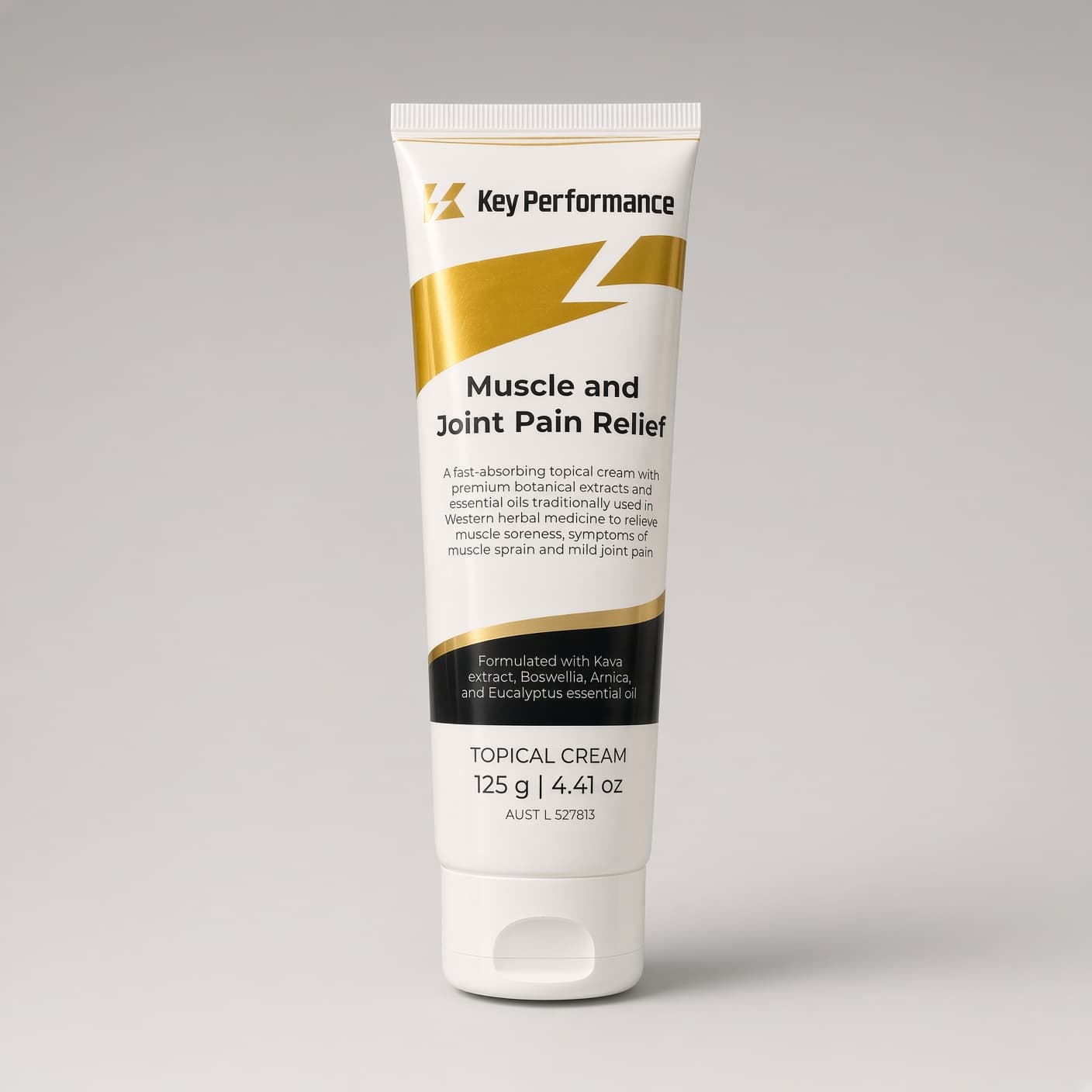
New to herbal creams? Start here. Each box shares a little of how the plant has been used in traditional health and medicine, then how it sits in this formula. Education only — not extra indications. The cream itself is traditionally used in Western herbal medicine to relieve muscle soreness and mild joint pain, and to help relieve symptoms of muscle sprain. No disease claims. Full quantitative formula is on the pack.
Kava
Piper methysticum
Traditionally
Grown across the Pacific, kava has a long place in community and herbal traditions. In wellness writing it is often discussed for its calming plant chemistry — that heritage is about the plant’s story, not a promise about how this cream works in your body.
In this cream
Here, kava extract is one of the seven actives in a topical cream traditionally used in Western herbal medicine to relieve muscle soreness and mild joint pain, and to help relieve symptoms of muscle sprain. This page does not present kava for anxiety, sleep, or any disease. Always follow the pack.
Boswellia
Boswellia serrata
Traditionally
Also known as frankincense resin, Boswellia has been used for centuries in Ayurvedic and other herbal traditions, often spoken of in the context of everyday joint comfort and mobility support in traditional practice.
In this cream
In this cream, Boswellia is a labelled botanical extract that sits alongside the other actives for the product’s listed traditional use: muscle soreness and mild joint pain, and to help relieve symptoms of muscle sprain. Education only — not an extra indication.
Arnica
Arnica montana
Traditionally
Arnica is one of the best-known flowers in European folk and herbal medicine for topical care after knocks, bumps, and everyday muscle or joint discomfort — the kind of first-aid plant many people recognise from creams and gels.
In this cream
We include it as a botanical in this topical formula, which is traditionally used in Western herbal medicine to relieve muscle soreness and mild joint pain, and to help relieve symptoms of muscle sprain. Use only on intact skin, as directed on the label.
Eucalyptus oil
Eucalyptus spp.
Traditionally
Native to Australia, eucalyptus leaves and oil have a deep place in traditional and household use — prized for a clean, clarifying aroma and long associated with topical rubs and chest-and-cold home routines in folk practice.
In this cream
In the cream it contributes the familiar aromatic, cooling character many people expect from a muscle-and-joint rub. Avoid eyes and broken skin. Not for internal use.
Cajuput oil
Melaleuca cajuputi
Traditionally
Cajuput (from the Melaleuca family, related to tea tree) has a long history in Southeast Asian and Pacific herbal practice as a warming aromatic oil, often used in traditional liniments and massage oils for tired muscles and everyday aches.
In this cream
It is one of the essential oils on the approved label for this cream. External use only — the same listed traditional use as the rest of the formula.
Rosemary oil
Salvia rosmarinus
Traditionally
Rosemary has been cultivated for centuries around the Mediterranean. In herbal and household tradition it shows up in aromatic baths, hair rinses, and muscle rubs — valued for its bright, herbaceous scent and a reputation for waking up tired limbs after work or sport.
In this cream
In Key Performance it is a labelled essential oil in the topical cream base. Soft context for first-time users — not a new claim beyond the pack. Always read the label.
Camphor
Aromatic compound
Traditionally
Camphor has a long history in traditional balms, rubs and liniments across Asia and Europe — the sharp, clean aromatic note many people recognise from classic muscle-and-joint rubs in household and folk practice.
In this cream
In this cream, camphor is one of the seven actives on the listing (AUST L 527813) and sits alongside the other actives for the product’s listed traditional use: muscle soreness and mild joint pain, and to help relieve symptoms of muscle sprain. Education only — not an extra indication. External use only. Avoid eyes and broken skin.